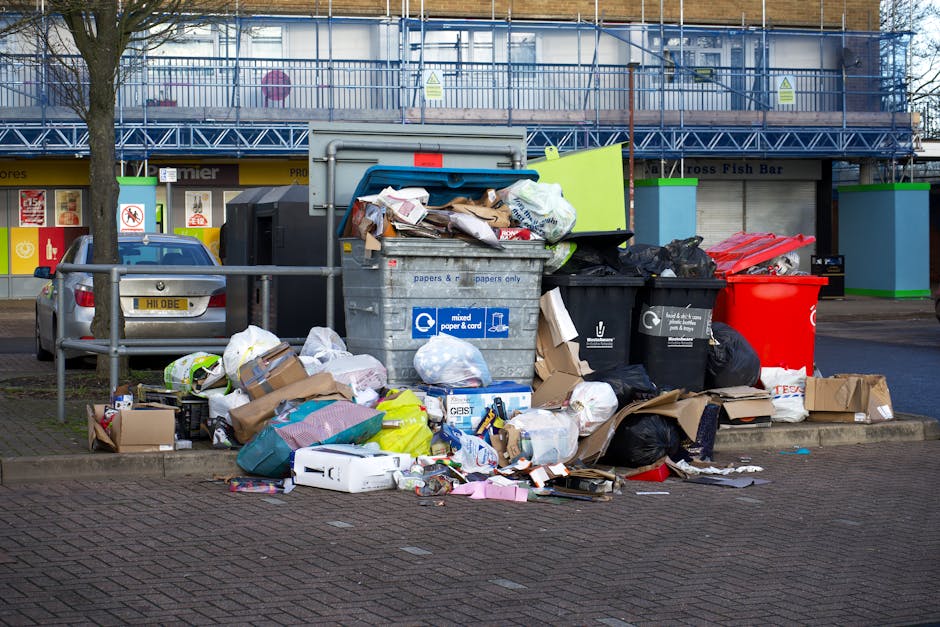
Commercial Waste in Loughton

Commercial waste in Loughton needs a clear, practical service that keeps business premises moving without turning waste into a disruption. We handle the collection and removal of everyday trade rubbish, bulky discarded items and mixed operational waste from workplaces that need a dependable route for disposal. The focus is on keeping the process straightforward: suitable collection, responsible handling and a service shape that fits the site rather than the other way around.
Our commercial waste removal service supports offices, shops, workshops, hospitality settings and other business premises that generate regular refuse or occasional one-off clearances. Where items can be separated for recovery, we support sensible sorting and recycling so that usable material is not treated as general waste by default. If you are comparing options, ask for a quotation once you know the likely type and volume of waste.
For many businesses, the key question is not simply how to get waste taken away, but how to keep the process tidy, predictable and suitable for the premises. That might mean clearing accumulated packaging, removing broken fixtures from back-of-house areas or managing waste from a move, refit or stock change. Our approach is built around those practical needs, with clear communication about the work and a service that can be matched to the waste you actually have.
General Business Waste Removal
We remove a wide range of non-hazardous commercial waste, including bagged rubbish, packaging, office clutter, light fixtures and mixed items from routine premises clean-downs. This is useful when bins are full, a landlord handover is due, or there is simply more waste than normal collections can handle. The service is designed for businesses that want a one-off clearance or ongoing removal arranged through a simple booking route.
Where waste contains different materials, we can deal with mixed loads in a way that keeps the process practical while still allowing recoverable items to be separated where appropriate. That matters for businesses that generate cardboard, plastics, redundant equipment and general refuse together. If you are planning a clearance, it helps to note the type of waste and whether access is straightforward. You can prepare a simple list of items before requesting pricing, but a full inventory is not usually needed for routine work.
What this service can include
Typical collections may cover office bags, shelf contents, packaging from deliveries, broken furnishings, light domestic-style waste from staff areas, and the contents of small storage spaces. The work is often chosen by firms that need a clean exit from a unit, a reset after a busy period or a practical way to clear clutter without interrupting trading for long. We can also help when waste has built up gradually and needs removing in one organised visit.
Office, Retail and Workspace Clearance

Office and workspace waste often includes a different mix from ordinary bin rubbish, so a careful sort of reusable and disposable items can make the process more efficient. We handle items such as old chairs, desks, files, boxed materials, redundant displays and general commercial clutter. This suits businesses moving desks around, closing a floor, refurbishing a unit or reducing the amount of unused equipment kept on site.
Retail premises may need removal of stockroom waste, damaged packaging, seasonal fittings or worn display items. Offices may need redundant furniture and paperwork-related clutter cleared without causing unnecessary disruption in shared areas. Confidential papers are not handled in the same way as general waste, and where shredding or secure destruction is needed, it should be planned as a separate, suitable service rather than mixed in casually with ordinary clearance.
For businesses arranging an office or shop clearance, the most helpful details are the kinds of items present, the amount to be removed and any site restrictions such as narrow access, loading limits or shared entrances. That information helps a quotation reflect the work more accurately. Keep the first enquiry practical and concise; if you need to speak to us again after that, send the details once and keep the rest simple.
Furniture, Fixtures and Bulky Item Disposal
Commercial premises often accumulate bulky items that are awkward to move through daily operations, especially when furniture is replaced or layouts change. We remove office chairs, tables, shelving, storage units, counters and other large items that are no longer required. This part of the service is useful when business furniture has reached the end of its working life or when a unit needs clearing before new equipment is installed.
Some bulky items can be dismantled to make handling more straightforward, while others are better removed intact. The right approach depends on the item, the access available and whether the business wants surrounding furniture left in place. We also consider whether anything can be prepared for reuse or material recovery. When businesses are replacing worn seating or redundant display pieces, the right disposal route can help avoid unnecessary clutter and keep the site presentable during the changeover.
Where a load includes both furniture and general waste, it is usually best to group items in a way that makes collection practical. That can reduce delays on site and help the work proceed in an orderly fashion. Useful destinations such as furniture clearance and furniture disposal give a clearer idea of the sort of bulky items covered when these materials form the main part of the job.
Fridges, Appliances and Other Specialist Items

Some business waste is heavier, more awkward or more regulated than normal refuse, which is why specialist handling matters. We can remove fridges, freezers and other appliances from commercial sites where those items are no longer required. Such loads need proper planning because they can involve restricted materials, heavy lifting and disposal rules that differ from ordinary office or shop waste.
Businesses in food service, hospitality, retail or managed premises may need to replace appliances during upgrades, repairs or refurbishments. In those cases the waste route should match the item type and the conditions on site. Where a collection includes a mixture of electrical equipment and general debris, it is sensible to separate them where possible so the collection remains efficient. This keeps the work easier to manage and helps avoid confusion about what needs specialist treatment.
There are also occasions when other specific items become part of a larger removal job, such as mattresses or soft seating from staff accommodation or commercial rest areas. Relevant service pages like fridge and appliance removal and mattress and sofa disposal show the kinds of specialist items that may be involved when a business has a mixed clearance rather than standard bin waste alone.
Builders, Fit-Out and Refurbishment Waste
Trade and refurbishment waste often builds up fast because the work produces packaging, offcuts, broken fittings and other debris that are awkward to leave on site. We remove builders’ waste from business premises, fit-out projects and light refurbishments where a skip is not the most convenient answer. This can include timber offcuts, packaging, plasterboard-like waste, redundant fixtures and mixed debris from works taking place inside a trading property.
The practical benefit here is flexibility. A collection can be organised around the actual waste sitting on the floor rather than a fixed container size, which is helpful when access is limited or the amount of material is uncertain. It also suits sites where waste must be taken away quickly enough to keep walkways, storage areas and customer-facing parts of the premises in a usable state. Careful separation of cleaner materials from mixed rubble can make the process more efficient.
Where the project involves a larger mixed load, the strongest fit may be a dedicated builders’ page such as builders waste clearance. If the waste is part of a general business clean-out rather than a construction project, the broader waste removal route may be the better place to start when deciding how to organise the work.
Household-Style Clearances for Business Premises

Commercial properties sometimes contain household-style waste, especially where there is staff accommodation, a managed property, a mixed-use building or a business moving out of premises with storage and domestic overflow. In those cases, the clearance may resemble a house or flat clearance as much as a standard workplace collection. We can remove mixed contents, unwanted soft furnishings, general clutter and items that have built up away from the main working area.
Some businesses also manage properties that include lofts, garages or other storage zones. These spaces often gather surplus boxes, damaged household items, old decorations, broken tools and assorted materials that are no longer needed. The right service depends on the contents, access and the size of the area. A clearer understanding of the items involved makes the job easier to plan and may help separate the useful from the disposable before collection.
For those situations, pages such as home clearance, house clearance, flat clearance, loft clearance and garage clearance describe related clearance types. They are relevant when the waste is more like a stored contents job than ordinary trade rubbish, especially where the aim is to clear a space in a controlled and tidy way.
About Loughton
Loughton is a town in the Epping Forest district of Essex, set on the northern edge of the Greater London urban area. Its character is shaped by a long relationship with nearby woodland and by the growth of suburban settlement in the nineteenth and twentieth centuries. The town lies close to Epping Forest itself, with open green space and mature trees giving much of the surrounding area a more spacious feel than the dense streets found in central London. As a place, Loughton combines older street patterns, later residential development and a busy local centre that serves both residents and nearby visitors. Historically, the settlement grew from a rural parish into a more substantial commuter town as transport links improved, especially after the arrival of the railway in the Victorian period. That change encouraged new housing and a stronger retail presence, while still leaving reminders of earlier centuries in churches, older buildings and the historic layout of parts of the town. The landscape around Loughton is also notable for access to forest paths, commons and recreational routes that connect built-up streets with wider green surroundings. Cultural life in the town reflects this mix of suburban practicality and natural setting, with local schools, leisure facilities and community venues supporting everyday life. The town’s position near the boundary between London and Essex has long influenced its identity, making it a place where woodland, commuting, local shopping and residential neighbourhoods sit side by side. Even today, the relationship between town centre, outlying roads and the nearby forest remains a defining feature of Loughton’s appearance and atmosphere.
Recycling, Sorting and Responsible Disposal
Commercial waste is rarely just one material, so a useful collection service should think beyond simple loading and removal. Where suitable, we separate recyclable materials from general rubbish and route items in a way that supports responsible disposal. Cardboard, certain metals and other recoverable materials may be treated differently from mixed waste, depending on what is present and how cleanly it has been kept on site.
This matters because businesses often produce a blend of packaging, office materials, broken fixtures and storage waste that does not all belong in the same stream. Keeping some separation before collection can make the process smoother, but it does not have to become complicated. What helps most is a sensible description of the waste and a clear idea of what should be removed. If your site produces regular waste, a repeatable pattern may be easier to manage than treating each clearance as a new problem.
For customers who want to understand the wider approach, the related page on recycling and sustainability explains the kind of careful waste handling that may be relevant when the aim is to dispose of business waste with less unnecessary material going to general disposal routes.
Practical Booking and Quotation Details

When requesting a quotation, it helps to describe the main waste type, the amount involved and any access considerations that might affect collection. A business with a single room of clutter will need a different estimate from a site with several areas, heavy items or mixed waste requiring extra sorting. Good details make the process more accurate and reduce the chance of back-and-forth later. A few photographs can also be useful, but they are not a substitute for a clear description of the load.
It is also helpful to mention whether the collection is part of a move, a refit, a periodic clean-up or a one-off disposal of surplus items. Those different situations can influence how the work is organised and what kind of timing makes sense. If you already know that the waste includes appliances, furniture or items needing separate handling, say so early. You can also request a quotation directly and let the scope be discussed from there, rather than trying to over-explain every detail at once.
If you are ready to compare options, the pricing and quotes page is the most direct place to start. For a simpler next step, just send the details of the waste and ask for a quotation; we will work from the information provided and shape the collection around the job rather than forcing the job into a fixed template.